Permeable paving lets rain soak down between the blocks of a driveway instead of running off it into the road. Whether it is worth it on your property comes down to how your ground drains and, if your project needs City approval, what that approval asks for.
Where we stand: we lay driveway paving in Cape Town, and we will price a permeable build-up next to a standard one if you ask. The technical detail below comes from the Concrete Manufacturers Association (CMA), the body for precast concrete paving producers, which champions permeable block paving. We quote it and say where the view is ours.
The short version
- How it works: rain passes through enlarged joints filled with angular stone, not sand, into a layer below that stores it and lets it go slowly [3].
- Not named in the by-law: Cape Town’s 2005 Stormwater Management By-law does not mention paving [1]. The City’s 2009 stormwater policy can put requirements on development, but does not name permeable paving [4].
- Your ground decides the design: the CMA says a key criterion is how permeable the ground is, “established from tests on site” [3].
- It still needs looking after: the CMA says water gets through more slowly as detritus builds up in the joints, then levels off [3].
- No published rate: the build-up under the blocks is what changes, so we price it after seeing the site.
How permeable paving works
Rain runs between the blocks, through joints filled with small angular stone, into a sub-base that holds it and releases it slowly: into the ground or onward to a drainage system [3].
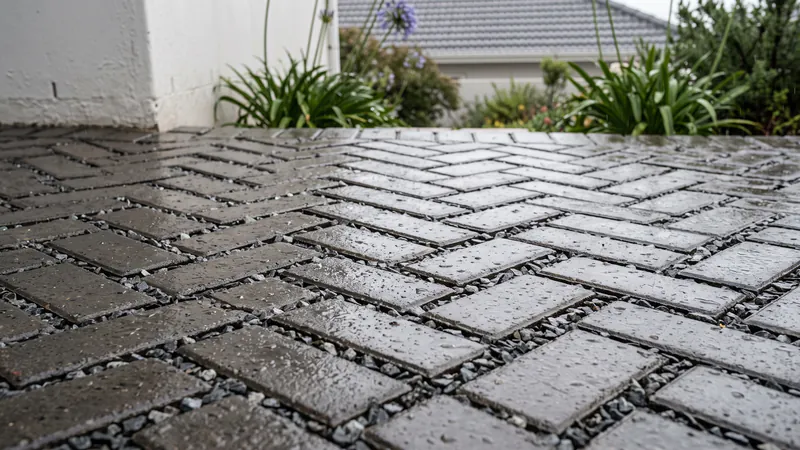
- The surface: blocks with “enlarged joints or holes in the corners of the pavers”, filled with a material specific to each product, “which is an angular aggregate, not sand” [3].
- The layer below: a permeable sub-base that the CMA says is “specifically designed to accommodate water”, where it is stored and released slowly [3].
- The edges: like any concrete block paving, “all cbp must have an edge restraint”, which may be cast in situ, precast or an existing structure [2].
The CMA describes three systems, which look the same on the surface [3]:
- System A, full infiltration: for ground that drains well. All the water soaks into the ground; none goes to conventional drains.
- System B, partial infiltration: some soaks in, and outlet pipes carry the excess to other drainage.
- System C, no infiltration: for ground that drains poorly or contains pollutants. A membrane turns the sub-base into a storage tank, emptied by outlet pipes.
Ordinary block paving sheds rain off the surface instead, and the CMA says its joints “eventually become clogged with road detritus and impermeable to water” [2].
What Cape Town’s stormwater rules actually say
The 2005 Stormwater Management By-law does not mention paving [1]. The City’s 2009 stormwater policy can require stormwater measures on private developments, a single erf included, but it does not name permeable paving [4].
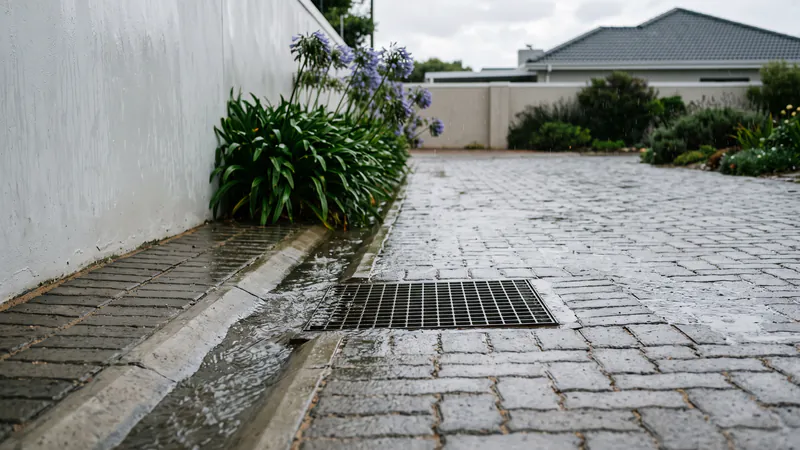
The 2005 by-law [1]:
- We searched its text for paving, permeable, impervious and attenuation. None of those words appears.
- Section 8 puts private drainage on the owner, who must “at own cost, keep such stormwater systems functioning effectively” [1].
The 2009 Management of Urban Stormwater Impacts Policy [4]:
- Its definition of development includes “paving”. New developments, including “additional development on an already developed site”, shall be designed to incorporate sustainable urban drainage systems [4].
- Council “may require” those measures inside a private development, and the policy names “private single erf developments” [4].
- Its interim criteria are lighter for small existing sites outside sensitive catchments. Under 4,000 m², with more than 600 m² of hard surface, on-site treatment and runoff control are “not required but encouraged where practicable”, with regional measures doing the work instead [4].
- The City’s 2022 roads and stormwater standards add that this holds only where those regional measures are available; if they are not, on-site treatment and attenuation “will typically be required” [6]. Neither document sets a criterion for a site under 4,000 m² with 600 m² or less of hard surface.
- Stricter targets apply to greenfield sites and to sites in the catchments of what the City deems sensitive waters [4].
We read the policy as approved on 27 May 2009, and the City’s 2022 standards, which still cite it [6]; the policy says its criteria can be revised without re-adopting it [4], so check the current position with whoever draws your plans. Where a stormwater design is required, permeable paving is one option, and the CMA says it can also take runoff from roofs and nearby hard surfaces [3].
What drives the price
We don’t publish a rate for permeable paving. The part a site visit settles is the build-up under the blocks, which follows from how your ground drains [3].
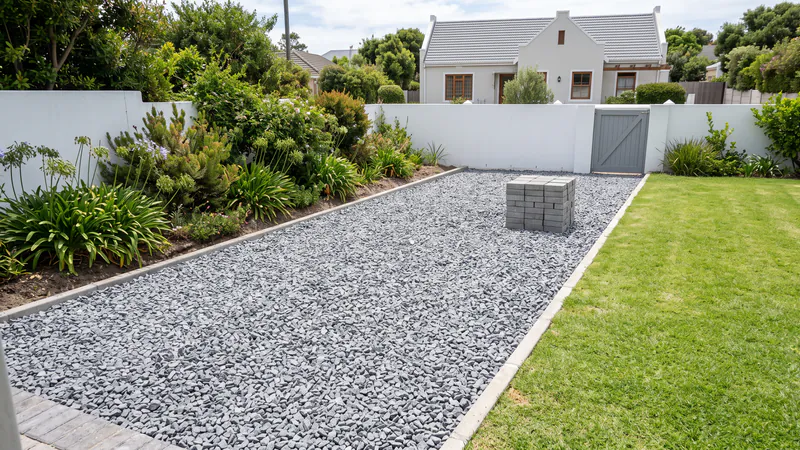
- The site test. The permeability of the ground, “established from tests on site”, is one of the key criteria for choosing a system [3].
- Which system you need. System A needs no pipes or gulleys. System B adds outlet pipes, and System C adds an impermeable membrane as well [3].
- The other factors the CMA lists: groundwater level, pollution prevention, discharge consents and how close the paving is to buildings [3].
- What it replaces. The CMA calls full infiltration “a particularly economic solution” because it removes pipes and gulleys [3]. In our view, compare the whole drainage cost, not just the paving line.
We price it like every kind of paving Paving Cape Town lays, after seeing the site. Ask for both priced side by side, and see how a paving quote is built up.
Where it works and where it doesn’t
It suits ground that lets water soak in. Poorly draining ground, a high water table or paving near the house need weighing up in the design [3], and so, in our view, does a slope.
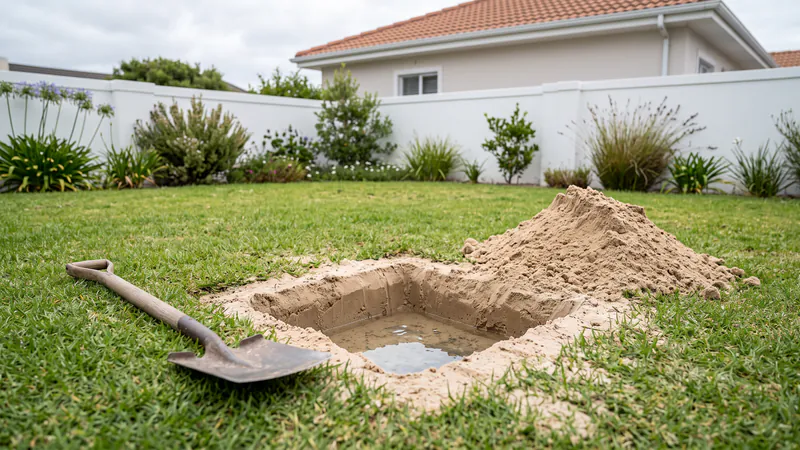
Good fit
- Ground that drains well, where full infiltration sends the water into the ground [3]
- A level area: the CMA says permeable block paving avoids standing water without cross falls, channels or gulleys [3]
- Mixed layouts: the CMA describes Cape Town’s Grand Parade, where water runs off conventional paving onto a permeable section [3]
Watch out for
- Ground that drains poorly or is contaminated: the CMA’s answer is a partial or no-infiltration system with outlet pipes [3]
- A high water table: groundwater level is one of the CMA’s selection factors [3]
- Paving right beside the house: proximity to buildings is another [3]
- A slope: on ordinary paving, the CMA says water getting in “can accumulate in the bedding sand at the low point” [2]. We found no CMA guidance on slopes in its permeable paving introduction
On the Cape Flats, a 2022 study of the area’s sands measured surface infiltration rates that “will result in generally minor runoff or ponding”, though the same study notes that fines and detritus on the surface, or less permeable layers below, can still cause ponding and flooding in heavy rain [5]. It also put average winter groundwater about 2 m below ground, “with the water table rising above ground level in places”, and found the sands “highly variable” [5]. In our view that makes a site test more important there, not less.
Maintenance: what the joints need
Keep leaves and grit off it, and watch for water sitting where it used to drain away. The CMA says the infiltration rate drops as detritus builds up in the jointing material, then stabilises [3].
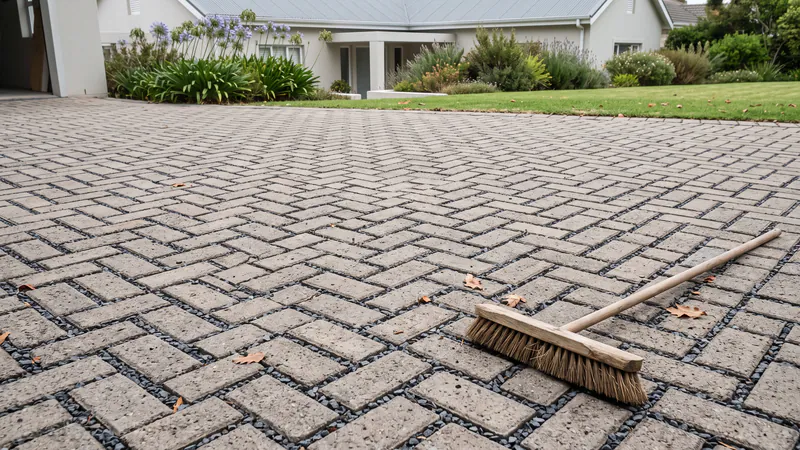
- How much work: the CMA calls recommended maintenance “minimal”, no more extensive than for conventional block paving [3]. That is the industry body promoting the product.
- What slows it down: “the build-up of detritus in the jointing material” [3].
- How you spot trouble: the CMA says problems “become apparent on the surface with a visual inspection” [3]. In our view, water standing where it used to drain is the sign to get it looked at.
- Topping up: the joint fill is an aggregate specific to each product, “not sand” [3], so ask for that product’s filling.
In our view, sweeping leaves and grit off through leaf-fall is the routine; we don’t publish an interval. Standard paving is different: see the upkeep ordinary block paving needs.
So which suits your driveway?
Our view, as a paving business: let a site test and your plans decide. Go permeable where the ground takes water or a design calls for it, and lay standard paving with proper falls where neither applies.
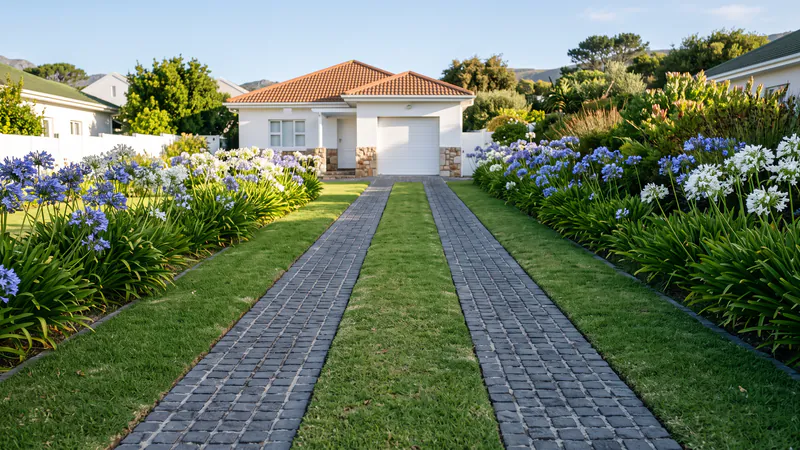
Permeable build-up
Best if the ground drains or a design calls for it
In our view this is the option that actually deals with runoff. The CMA ties the choice of system to a test of your ground [3].
Standard paving and drainage
Best if runoff isn’t a problem
In our view the simpler build where no design asks for more. Book 2 says a minimum fall of 2% in any direction is generally required [2].
Grass wheel strips
Best for a straight run to the garage
In our view a strip of lawn only takes a slice out of the runoff. Our layout ideas cover wheel strips with a grass centre.
For a complex or office park, we lay permeable paving on commercial sites to your engineer’s design; see what body corporates should put in a paving spec.
Common Questions
What is permeable paving?
Block paving with enlarged joints or corner holes filled with angular aggregate instead of sand, laid over a sub-base designed to store water [3]. Rain passes between the blocks and is released slowly into the ground or a drainage system [3].
Does permeable paving cost more?
We don’t publish a rate or a percentage. In our view the difference sits in the build-up under the blocks, which depends on which of the CMA’s systems your ground needs and whether it adds outlet pipes or a membrane [3]. Ask for both priced side by side on your driveway.
Does the City of Cape Town require permeable paving?
Not by name in the two City documents we read. The 2005 Stormwater Management By-law does not mention paving [1], and the 2009 stormwater policy can require stormwater measures on development without naming any particular surface [4]. The by-law does make an owner keep private stormwater systems “functioning effectively” at their own cost [1].
How long does permeable paving last?
We don’t publish a lifespan. The CMA, which promotes the product, says the rate water gets through drops as detritus builds up in the joints, then stabilises [3]. Our guide to what shortens a driveway’s life covers the build faults to avoid.
Does permeable paving work on a slope?
We found no CMA guidance on slopes in its permeable paving introduction. On ordinary paving, the CMA says water getting in on a slope “can accumulate in the bedding sand at the low point” [2]. In our view a sloping site needs a designed drainage detail, so ask for one rather than assuming.
Can I use permeable paving for my pool surround?
Check before you commit. The CMA lists proximity to buildings as a factor in choosing a system [3], and in our view paving around a pool deserves the same care. Ask whoever built the pool before letting water soak in beside the shell.
Weighing up permeable against standard paving? We do free on-site assessments across the Peninsula and follow with a written quote, with no obligation to use us for the work. See how a written quote comes together, or call 021 825 6396, weekdays 8am to 5pm.
Sources
- City of Cape Town — Stormwater Management By-law, 2005 (s8(1): owner responsibility for private stormwater systems). openbylaws.org.za
- Concrete Manufacturers Association — Concrete Block Paving, Book 2: Design Aspects (sec 2.2 block layer; sec 2.6 edge restraints; sec 2.7 drainage). cma.org.za (PDF)
- Concrete Manufacturers Association — An Introduction to Permeable Concrete Block Paving (2010; systems A, B and C; system selection; service life and maintenance; Grand Parade, Cape Town). cma.org.za (PDF)
- City of Cape Town — Management of Urban Stormwater Impacts Policy, approved by Council 27 May 2009 (definitions; sec 6.2.1, 6.2.2 and 6.2.11; annexure of interim criteria). capetown.gov.za (PDF)
- Fouché & Day — “Geotechnical properties of Cape Flats sands”, Journal of the South African Institution of Civil Engineering 64(2), 2022. scielo.org.za
- City of Cape Town — Standards and Guidelines for Roads & Stormwater, Version 3.0, February 2022 (sec 10.5.1.2). capetown.gov.za (PDF)