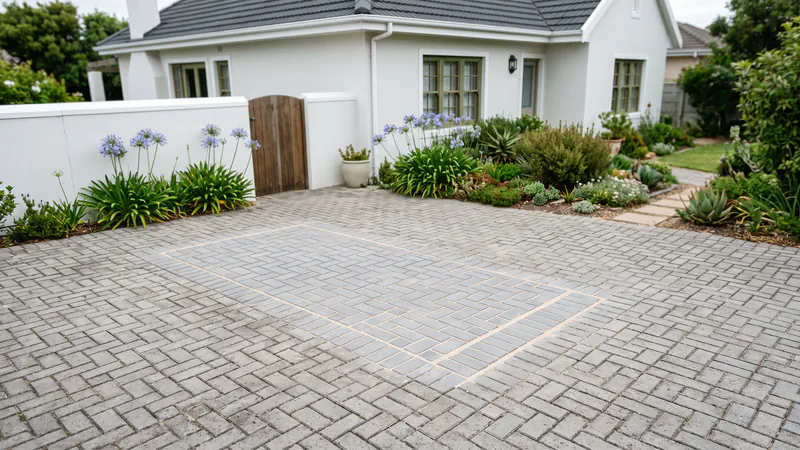
When paving fails in one spot (a sunken patch, a few cracked pavers, joints that have emptied), the affected area can be lifted, the cause fixed and your own pavers relaid, without redoing the whole driveway.
We lift a few pavers at the worst point, show you what is going on underneath, then put a written repair quote in your hands. That includes paving somebody else laid. Free, with no obligation.
The short version
- Something underneath moved. The Concrete Manufacturers Association (CMA) names four causes of settlement: a weak subbase or subgrade, subsoil water, overloading, or too thick a bedding sand layer.
- The fix is a lift-and-relay. CMA Book 2: lift the area, address the problem, reinstate the level, re-lay the pavers.
- Local repairs are manageable. Book 2 says that where defects occur locally, repairs "are not usually difficult, time consuming or costly".
- No rate card. We price a repair after we have seen what is under the pavers.
Repair Or Replace? When To Do Which
In our view, failure in patches is usually a repair. Sinking across the whole area needs the layers assessed first.
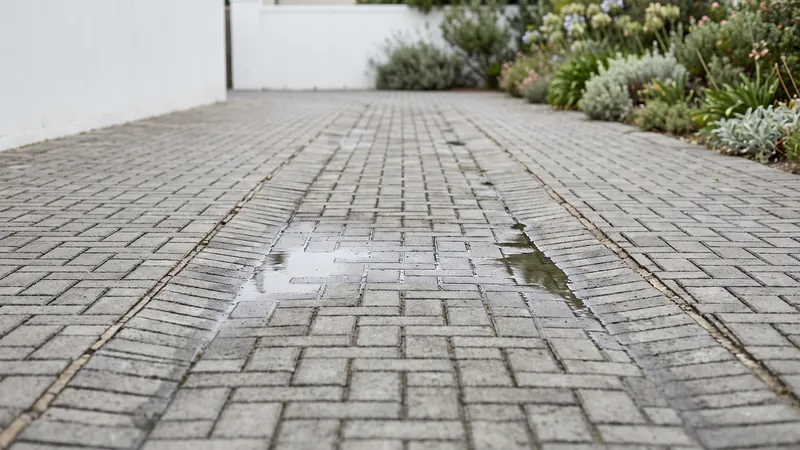
REPAIR — a sunken section
Patches that have dropped or rock underfoot. We lift them, fix what failed underneath and relay your original pavers wherever they come up whole.
REPAIR — broken pavers in isolated spots
Cracked pavers are lifted out and replaced with the closest match we can find, which you see before we start.
REPAIR — joints that have lost their sand
If the surface is still flat and only the joints have dropped, in our view refilling them may be all it needs.
REPAIR — edge pavers moving outwards
The CMA says all concrete block paving must have an edge restraint, which can be an existing structure. We repair the edge as part of the relay; in our view, skipping it leaves the same weakness in place.
ASSESS FIRST — sinking across the whole area
That points to the layers under all of it. We show you whether a full relay or a new driveway built from the base up is the sensible call.
Why Paving Sinks, And What We Look For Underneath
A faulty paver is not on the CMA's list of causes. We open a small inspection hole so the quote fixes the cause, not just the surface.
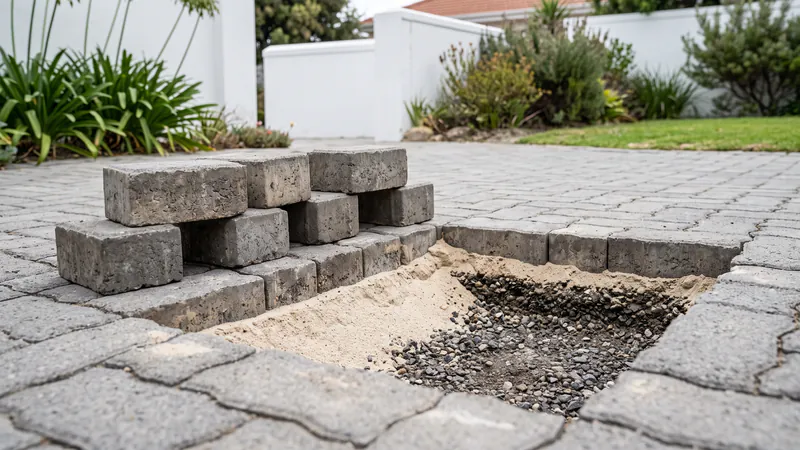
Subbase or subgrade
The compacted layers the sand and pavers sit on. If they give, the surface follows.
Subsoil water
On drainage, Book 2 says "Most failures of pavements are due to ingress of water into the pavement layerwork."
Overloading
More load than the paving was built for. The CMA says 50–60mm blocks are generally adequate for domestic use.
Too much bedding sand
It should be 25mm after compaction, 10mm either way. Used to fill hollows, Book 2 says it "will lead to subsequent settlement."
Our guide to the four reasons block paving settles goes deeper, and the hidden layers that decide whether paving holds up are covered one by one.
How A Repair Job Runs
Five steps: the first two decide what the repair is, the last three are the lift-and-relay itself.
On-site assessment
We dig a small inspection hole at the worst spot and show you what is going on underneath. Free, no obligation.
A straight recommendation
A localised repair if the failure is contained, a larger relay if it is not, followed by a written quote.
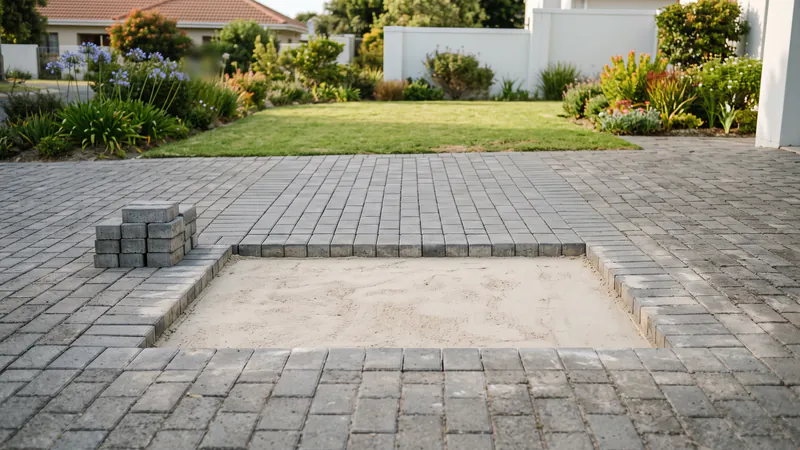
Pavers lifted & stacked
The affected pavers are lifted by hand and stacked for reuse, and failed base material comes out. A few can crack on lifting.
Base rebuilt & pavers relaid
Where the base has failed, compacted G5 goes back in, and failed edges are repaired. Bedding sand is screeded loose to reach 25mm ±10mm once compacted, never used to fill hollows, and the pavers go back down.
Joints & hand over
Fine jointing sand is brushed in and compacted, the surface swept clean, and we walk the relaid area with you.
When Re-Jointing Is Enough
If the surface is flat and only the joints have dropped, refilling them may be the whole job, and in our view usually the smallest one on this page.
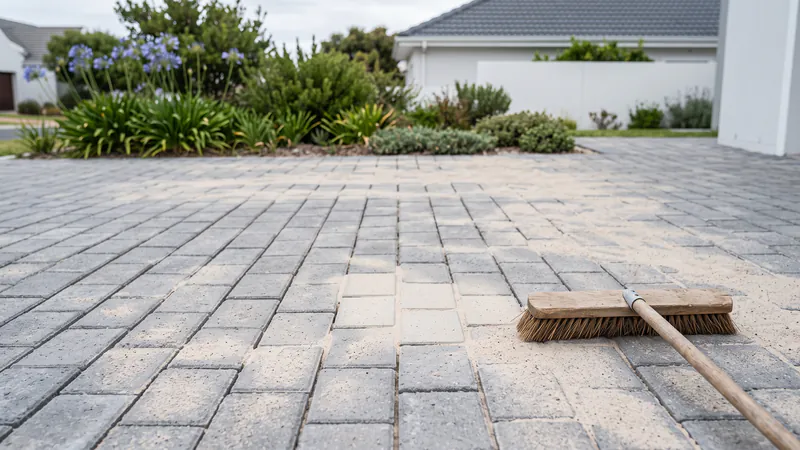
Do
- Use a finer sand than the bedding layer. Book 2: "a finer plaster sand is necessary for jointing".
- Brush it in. CMA Book 3: the sand "should be brushed and not washed into the joints".
- Keep joints full. Book 3 calls fully filled joints essential to the pavement's full structural performance.
Watch out for
- Cement in the jointing sand. Book 2 says it leads to cracking and water ingress, except a little right around a downpipe or outlet.
- Joints that wash out again soon after refilling. Look at where the water is coming from.
- A dip or rocking pavers. That is a relay, not a re-joint.
Between repairs, the home upkeep that keeps joints full covers sand, weeds and drains.
What Paving Repairs Cost
We don't publish a per-square-metre rate. What sits under the surface moves the price most, so we quote after we have looked.
A minimum charge
A crew and a plate compactor come out however small the job, so very small repairs can carry a minimum. If yours does, we tell you at the assessment and it is on the written quote.
Depth of the repair
Relays are priced per square metre of the area we lift, and the rate depends on how deep the base has to be rebuilt.
Your pavers or new ones
Whether your existing pavers can go back down, or replacements have to be bought in and matched.
How much of the area
Joint-only re-sanding is priced per square metre treated. A whole-zone relay prices much like a fresh install, because that is effectively what it is.
You get a written quote after we have seen the failure, never a figure over the phone: a photograph cannot show what is under the pavers.